
How Simple Principles Shape How Your Home Feels- Riche The Mag - Issue 55

Updated: Apr 10
Ever wonder why some rooms feel calm and inviting while others feel cluttered and uncomfortable? The answer lies in how well some simple design principles are working together in a space. You may not know the technical terms but you certainly feel the results.
Take balance for example - walk into a room where all the heavy furniture sits on one side and the other side feels empty. You instinctively feel that something is “off.” That is because your eye is looking for visual balance. Designers use this by spreading out visual weight: a sofa balanced by two chairs, or a bookcase balanced by
Then there is proportion and scale, which is really about making sure things fit the space and each other. A tiny rug floating iin the middle of the living room, or an oversized sofa crammed into a tiny apartment, both disrupt how comfortable the space feels. A good rule of thumb: furniture should relate to the room and to the people using it. Your feet should reach the floor, you should be able to reach the cocktail table, and your rug should define the seating area, not look like an afterthought.

Rhythm sounds musical, but in design, it simply means repetition that guides your eye. Think of matching nightstands, repeating wood tones, or a color that shows up in pillows, artwork, and accessories. These small repeats help the room feel connected, rather than random, like parts of the same story rather than unrelated chapters.
Contrast is what gives the room personality, highlighting differences in color, shape, texture, and material. These differences create just enough variation to make a space feel alive rather than bland. Even very simple Interiors need contrast to help them feel layered and memorable.
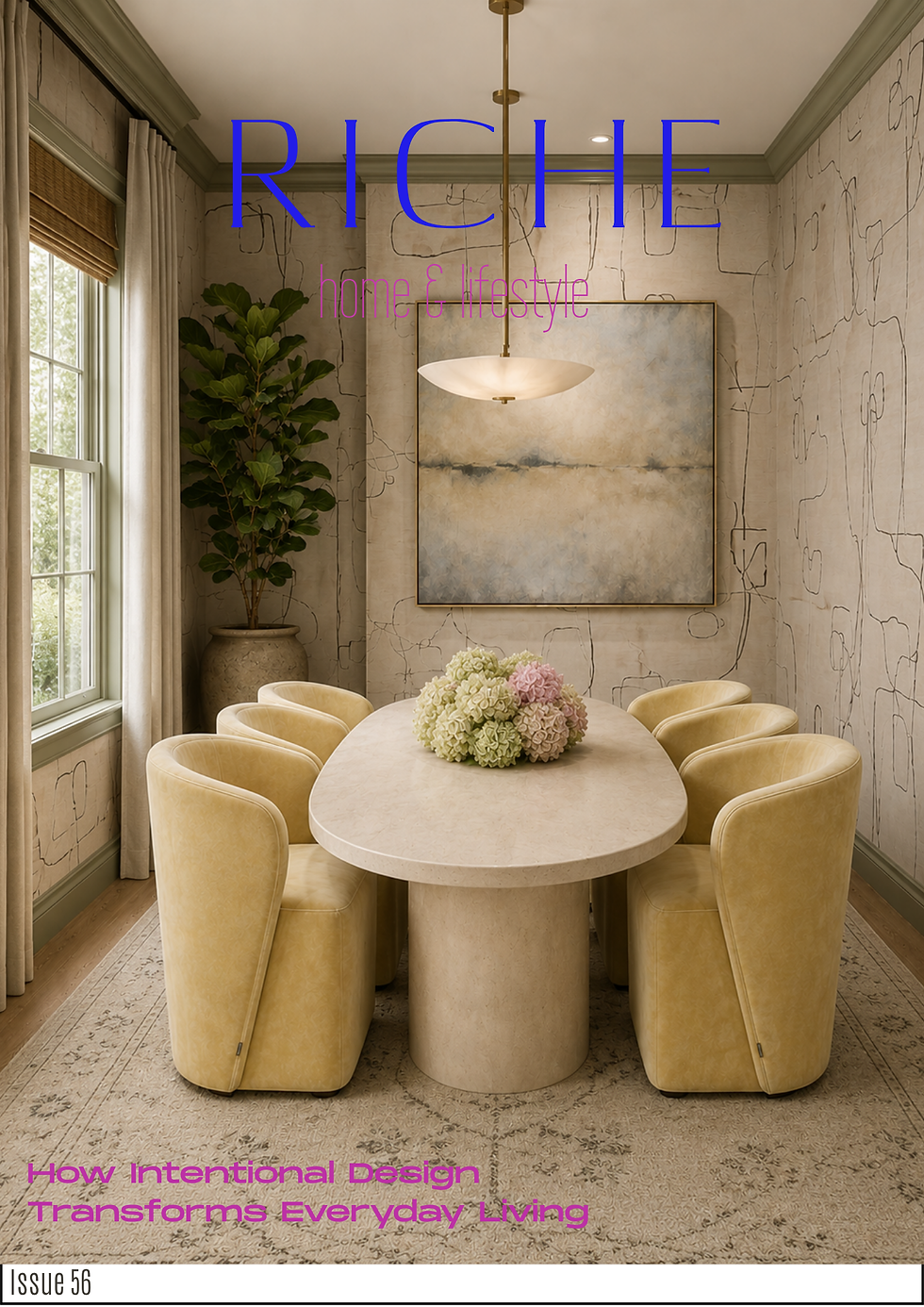
Emphasis (Focal Point) is about giving the eyes somewhere to land. Every room benefits from a focal point: a fireplace, a beautiful headboard, a statement light fixture, or an oversized artwork. Without emphasis, a space can feel flat and forgettable, even if everything in it is nice.
Finally, harmony and unity are what make a home feel calm and intentional. This doesn’t mean everything has to match, but it should relate. Mixing styles works when there’s a common thread – similar colors, materials, or shapes – that creates continuity throughout the space. It’s the difference between “collected” and “cluttered.”
When designers work on a space, these principles guide every decision: from layout and furniture size to lighting, color, and finishes. The goal isn’t perfection; it’s comfort, flow, and a feeling that the space supports how you actually live. Interior design can be about following rules, but most importantly, it’s about knowing how to use and apply its principles to create rooms that feel good to walk into, easy to live in, and welcoming to the people you care about. When a room feels right, these principles were rightfully applied.


Comments