
The Transformative Power of Home

We tend to think of transformation as something we can see. A wall comes down. A room is painted. Furniture is rearranged. New lighting is installed. The photographs taken before and after tell an obvious story of change. But some of the most meaningful transformations within our homes are not nearly as visible. They are felt.

A room that once made us restless suddenly feels peaceful. A dining table becomes the place where the family gathers again. An ignored corner becomes the chair where we begin every morning with coffee. A living room that once felt formal becomes a place where people actually want to stay.
We think we are transforming our homes. Sometimes, our homes transform us.
MORE THAN A BEAUTIFUL ROOM
Interior design is often judged first by what the eye can see: color, furniture, textiles, artwork, lighting and beautiful objects. Beauty matters. But thoughtful design goes much deeper.
Every room quietly influences our behavior. Furniture placement determines whether conversation feels natural or awkward. Lighting can energize us or help us unwind. Color can make a room feel intimate, expansive, stimulating or serene. Good storage can create calm, while a lack of it can become a source of daily frustration. This is why transforming a home should not begin with the question, what should we buy? It should begin with a much more important one: How do we want to live here? Once we understand that, design begins to have purpose.
DESIGNING HOW WE FEEL
Consider arriving home after a long day.
One environment greets you with clutter, uncomfortable furniture, and harsh overhead lighting. Another welcomes you with a place to put down your belongings, a comfortable seat, warm pools of light, and colors that make you feel at ease.
Your body recognizes the difference before you consciously analyze it.
Our surroundings continually give us cues about where to walk, sit, gather, work, and rest. Thoughtful design removes unnecessary friction from these everyday experiences. It can also encourage connection.
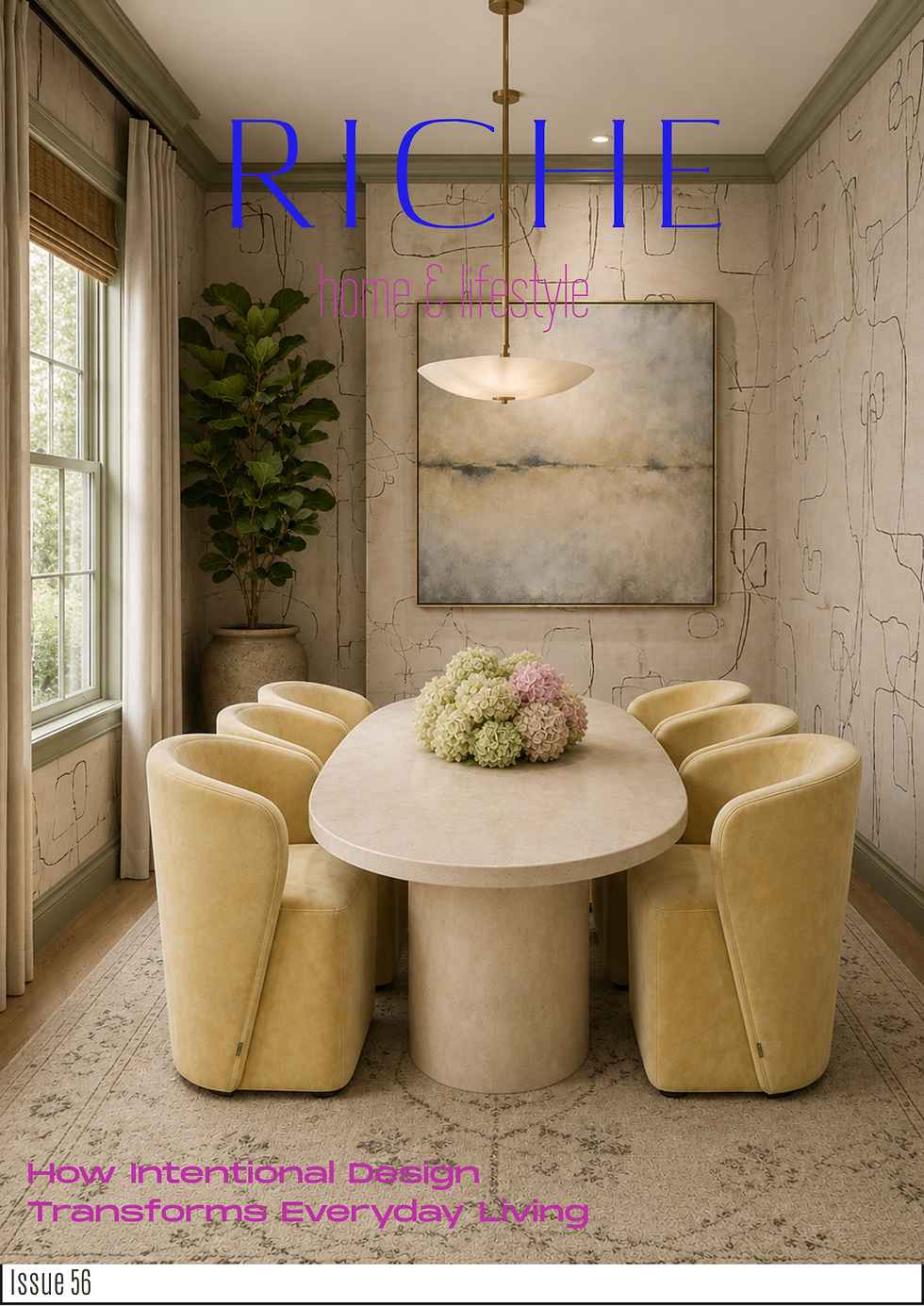
A dining room with comfortable seating and softer lighting invites people to linger. A kitchen island can become the place children gather while dinner is prepared. Seating arranged toward one another encourages conversation. An inviting outdoor area draws people outside. The room doesn't force us to behave differently. It simply makes certain experiences easier - and more enjoyable.
WHEN OUR HOMES NO LONGER FEEL LIKE US
Sometimes a home no longer feels right even when nothing is technically wrong even when nothing is technically wrong with it.Often, it is because we have changed while our surroundings have remained the same.
Our homes contain evidence of previous versions of ourselves: furniture purchased for an earlier home, rooms
s arranged around young children, colors we once loved and objects accumulated over decades.
There is beauty in that history. A meaningful home should never feel as though it arrived yesterday.But preserving our history does not require living permanently within it. Children grow up. Careers change. Families expand and contract. We travel, discover new things and develop greater confidence in what we love. Our priorities shift. Our homes should have permission to evolve with us.
TRANSFORMATION DOESN'T MEAN STARTING OVER
Creating a transformed interior rarely requires replacing everything. Some of the richest rooms come from the relationship between old and new: an inherited chest beneath contemporary artwork, an antique table surrounded by modern chairs, or a favorite sofa given new life through beautiful upholstery.
Transformation can also mean subtraction.
Sometimes a room needs new furniture. Sometimes it simply needs fewer pieces,a better layout, improved lighting or the confidence to remove objects that no longer contribute anything meaningful. Before asking what a room needs, ask:
What does this room no longer need? Editing creates breathing room, and allows the things we truly love to become more visible.
FUNCTION IS PART OF BEAUTY
A photograph can tell us whether a room is beautiful. It cannot tell us whether living there is beautiful. A successful home must work when nobody is taking the photograph. It must accommodate groceries arriving, children doing homework, friends dropping by, dogs jumping onto sofas, morning coffee, Sunday dinners and ordinary Tuesday nights. Life is not an interruption to good design. Life is the reason for it.
DESIGNING FOR THE LIFE YOU HAVE NOW
Nature never remains exactly as it was. Trees grow. Landscapes shift. Seasons arrive and disappear. What blooms eventually retreats, making room for what comes next.
Our lives move through seasons, too.The home that served us beautifully ten years ago may not be the home we need today. Recognizing that doesn't diminish what came before. It simply acknowledges what comes next.
Transforming a home isn't about chasing trends or replacing things simply because they are old. It is about paying attention - to the way we live, what brings us comfort, what creates unnecessary friction and what we want our homes to make possible.
Sometimes the transformation is dramatic. Sometimes it is remarkably subtle. But when design is approached with intention, its impact reaches far beyond the appearance of a room. It changes the way we gather.
The way we rest. The way we connect.And ultimately, the way we experience one of the most important places in our lives: Home.


Comments